

Hunt Clubs in Virginia are a Long-Lived Tradition!
By Denny Quaiff for Whitetail Times
Organized hunt clubs in Virginia have a history dating back more than 150 years. Records show that fox hunters were first to coordinate competitive trials with organized clubs. Today, the deer hunters and their clubs control much of the private land throughout the Old Dominion. With over 95 percent of the land in the state privately owned and whitetail deer being the number one big game animal, hunt clubs represent a large majority of the deer hunting community.
Today, cold November and December mornings always remind me of the Saturdays and holidays I spent as a youngster hunting in the late 1950s and early 1960s. In those days, I hunted with my Uncle Dickie and his Chesterfield County Oakland Hunt Club.
During that era, hound hunting in eastern Virginia was all we knew, and most of the rural Chesterfield County countryside was open to hunting, with very few posted signs. Landowners were often pleased with a ham or turkey for Christmas, and sharing a hindquarter from deer taken off their property was greatly appreciated. The hounds were owned by some of the club members, and in lieu of hunt club dues, a passing of the hat for donations was a regular practice.
After high school in 1968, I joined Spears Hunt Club in the Skinquarter neighborhood of Western Chesterfield County. I was working part-time at Vepco (known today as Dominion Energy) while attending John Tyler Community College. I worked with Bobby Moore, who became a good friend and sponsored my club membership. The annual club membership dues when I joined were $25.
By then, hunting leases with private landowners and hunt clubs had started to become a more common practice. When I was elected one of the club officers, I would visit with the local landowners before the season opened to secure the leases. The landowners from those days, much like I find landowners today, were very supportive.
One of my first experiences as a member of an organized hunt club was taking an active part in the hunt. Making drives with the hounds and seeing that stands were posted in safe locations were assignments that were taken very seriously.
However, the one thing hunt club membership has meant most to me was getting to know other hunters that share the same interest and the good times we have in common.
Throughout the years I have been a member of two different hunt clubs and played an active role in each organization. Last year, I wrote a column titled “Safety Should Always Be The #1 Priority,” which featured the senior member of my Amelia Springs Hunt Club, who fell 11 feet from his elevated shooting house in 2023 and broke both of his legs.
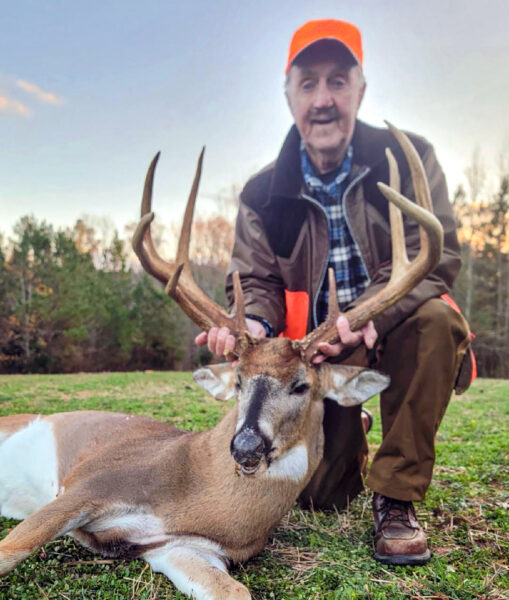
89-year-old Walter Link shot this big eight-pointer on the Friday after Thanksgiving during the 2024 hunting season. Walter shot the buck from the same elevated shooting house he fell from the year before and broke both of his legs. His remarkable recovery and determination to hunt is truly a blessing. Photo by Shane Rudd
Walter Link turned 89 years old on December 13, 2023. After three operations and far-reaching prayers for his recovery, our friend was back at the club hunting on the opening day of the general firearm season. Walter is not only a life-long hunter, but he is also a master heavy equipment operator. Throughout our club’s history, he has run bulldozers and backhoes for big projects he oversaw. We have always been able to count on Walter, and after his accident, the club wanted to do something special for him.
Knowing the aged condition of his shooting house, we offered to provide him a Red Neck Elevated Blind. However, he insisted on renovating his shooting house. When he made this request, Allen Wells and Jack Bergman took charge of the project. With more than $1,500 in materials and several days of work, the old shooting house was like new.
The final chapter of this remarkable story came on the Friday following Thanksgiving Day. Water shot the biggest buck taken on the club property that year from the same shooting house he fell from the year before. This was the spotlight for the club’s 2024-2025 season, and we had the buck mounted to hang in the club house dining hall.
We always know where everyone is hunting with our property map and magnets posted with the club members’ names of where we are located. Shane Rudd, who was hunting close to Walter that afternoon, said, “When I heard him shoot, I went straight to him to see if he needed any help.” This is how we look out for each other and set an example we can be proud of.
Membership Dues and Hunting Leases
Things have greatly changed since I became a hunt club member more than 57 years ago and paid $25 in club dues. Membership dues today often vary based on the number of club members and total land to be leased. I find that some clubs’ membership dues start at $500, and some are over $2,000. Some clubs have fundraisers to help offset the expenses and provide for projects that the dues will not support. Hunt Club members who work together stay together.
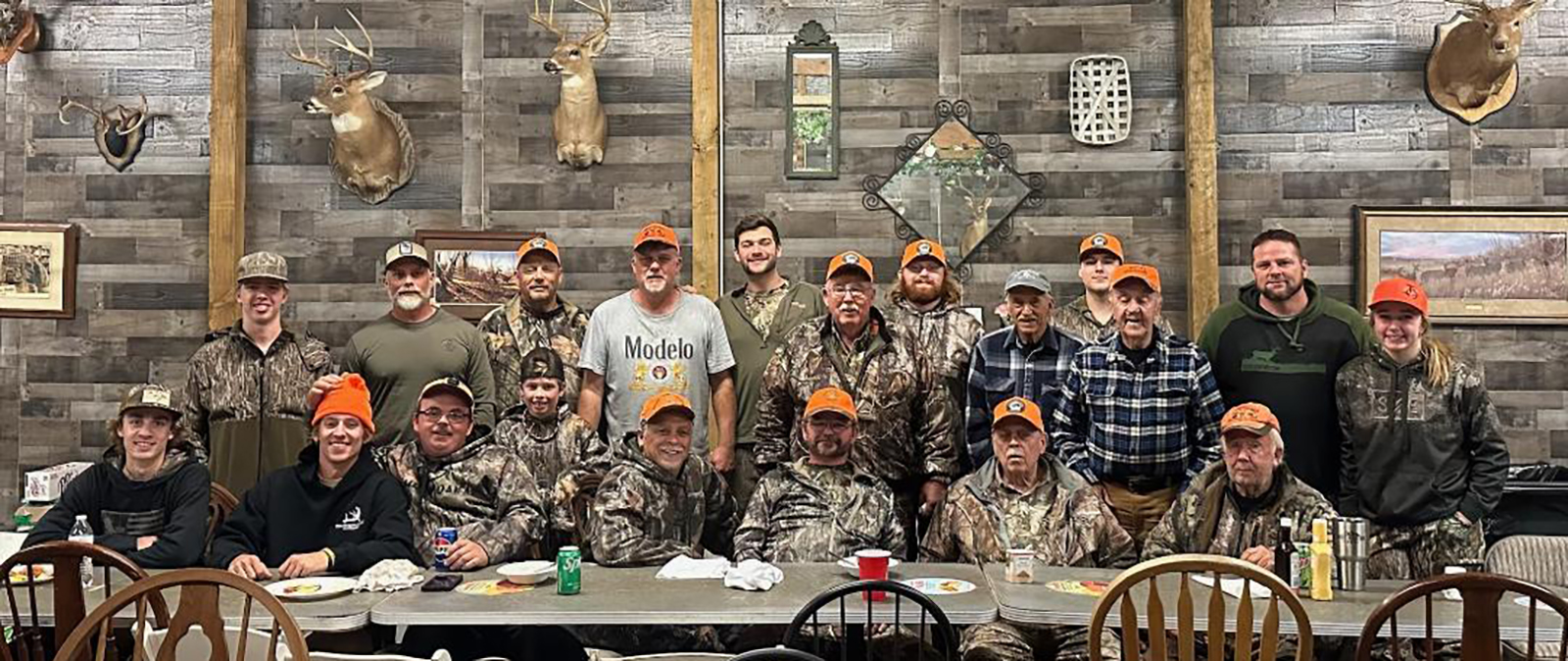
Deer management in Virginia has greatly changed over the past 77 years that the game department has collected harvest data. Hunt clubs play a major role in the statewide deer management program. Photo by Denny Quaiff
The cost of a hunting lease in Virginia can differ widely, depending on the size of the property, the quality of the game, and other factors. Limited partnerships, corporations and timber companies, along with farms and family properties, provide the hunting leases for hunt clubs. Private landowners are the backbone of hunting and the privileges we all enjoy.
Game Management
When I started deer hunting, the statewide mandate was a two-buck limit, and antlerless deer harvests were slowly taking shape. “Old-school” deer hunting involved taking any legal antlered buck, which was my experience as a young hunter. Hunt club leaders back in the day were not in favor of shooting does, and this mindset lingered.
Today, deer management objectives have changed towards controlling and stabilizing populations throughout much of Virginia. The change in deer management direction—from establishing and allowing deer herd expansion to controlling population growth—has been based on the cultural carrying capacity. Hunt clubs play a major role in meeting these objectives.
The Department of Wildlife Resources (DWR) has more than 700 clubs and landowners enrolled in the Deer Management Assistance Program (DMAP). Many of these hunt clubs practice Quality Deer Management by passing on young bucks. These same clubs are taking more does to create better herd balance. DMAP was introduced in 1988, and the program has been instrumental in modern day deer management for hunt clubs.
Hunt Club Fellowship and Support
When hunt clubs gather during and after hunting seasons, the fellowship brings together the true meaning of camaraderie. Those days spent around the skinning pole, sharing stories and enjoying the success of others, is what makes all the work and planning worthwhile. The special club dinners that include family, friends, and landowners make for a memorable gathering that we can all be proud of.
I have found being a member of a well-respected hunt club to be most rewarding. When hunt clubs reach beyond their club to the community and the needy, it sets a standard we can take pride in. The Hunters for the Hungry Program relies on hunt clubs for this support, which is another way to give back to the less fortunate. Clubs that set these standards are well recognized in the eyes of public opinion and the clubs that set this example are what we stand for.
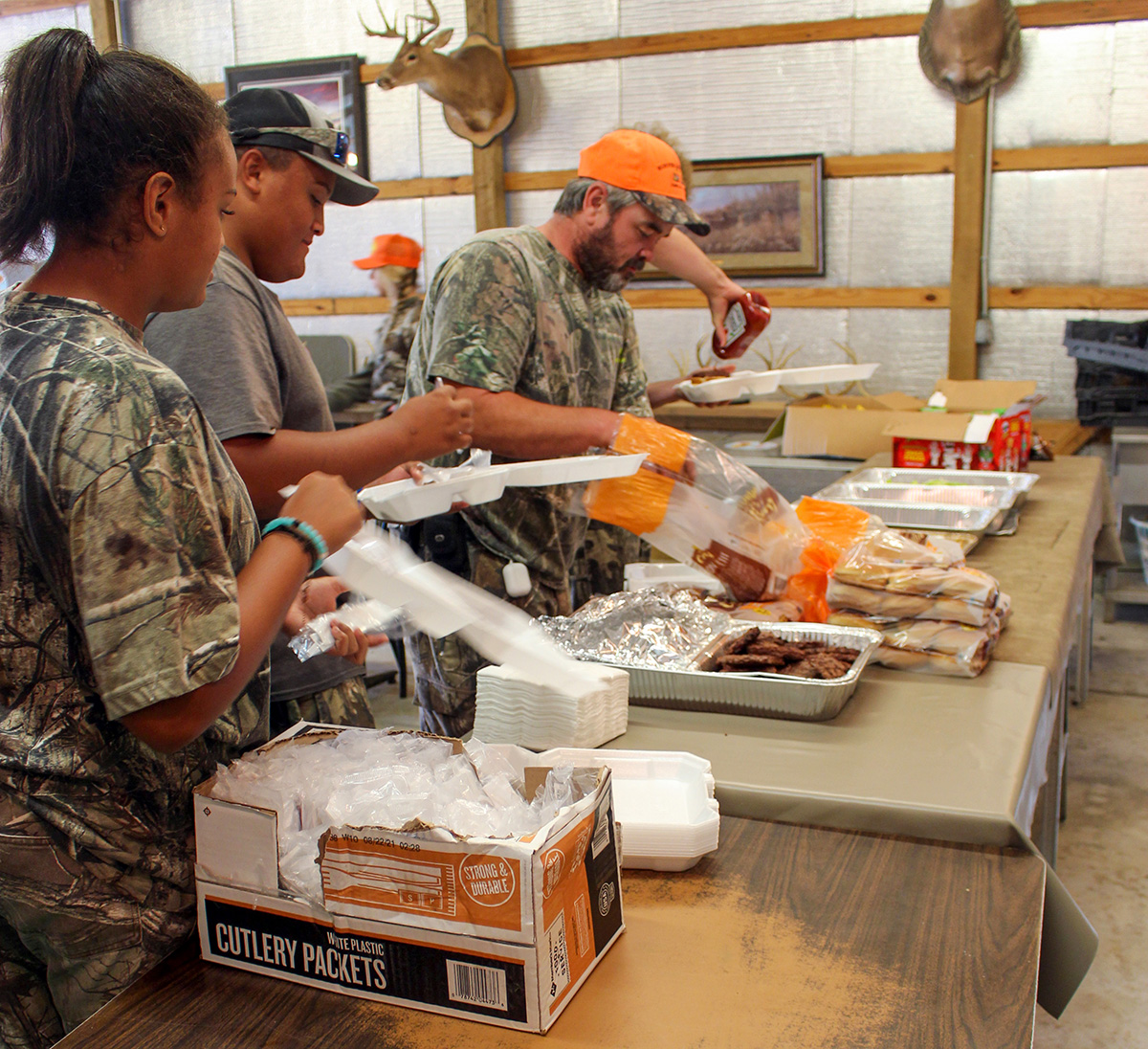
Special events, like wild game dinners, are enjoyed by all. When these gatherings include family, friends, and landowners, the camaraderie strengthens the relationship within the community. Photos by Tracey Dejarnette
I have heard of hunters who are the best of friends, yet during the hunting season would rarely talk. Jealousy has no place in a hunt club. I am pleased to say the clubs that I have been associated with believe that the taking of a nice buck is an accomplishment that all members treasure. Celebrating the success with fellow club members is what truly brings a group of hunters together and sets the stage for a solid meaningful foundation.
Membership in a well-established hunt club is a very favorable experience and has grown to be a year-round involvement. From pre-season and post season scouting to building and maintaining food plots—are all a labor of love. The pleasure of helping another member recover and haul their trophy buck to the skinning shed is the enjoyment that memories are built upon.
There has never been a greater need for organized hunt clubs in Virginia, and the backing of our private landowners is what we are most grateful for. With the support of ethical, safety-minded hunters who follow fair chase guidelines, this long-standing tradition has a strong future!
Helpful Guidelines for Good Hunt Clubs
- Club members and guest must obey all club rules and state game laws;
- Members and guest must follow good hunter ethics and hunter safety;
- Members must share responsibility of work and club functions;
- Members will get along and not create controversy;
- Members will support our youth and guests for the future of hunting;
- Members and guests will follow the club’s management guidelines;
- Members and guests will be restricted of all alcohol use while hunting;
- Members will be there for fellow hunters to transport and recover deer;
- Members are to make sure another club member knows where you will be hunting in case of an emergency;
- Members should always be courteous to joining landowners and neighboring hunt clubs. Remember that it’s a privilege to hunt private land and it’s each hunter’s obligation to protect those rights.
Legal Disclaimer:
EIN Presswire provides this news content "as is" without warranty of any kind. We do not accept any responsibility or liability for the accuracy, content, images, videos, licenses, completeness, legality, or reliability of the information contained in this article. If you have any complaints or copyright issues related to this article, kindly contact the author above.
